Back to Results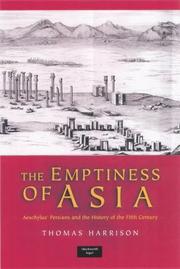
—out of 5—out of 5—out of 5—out of 5—out of 5—out of 5
Magical Tome
- First published
- 2000
- Publisher
- Duckworth Publishers
- Pages
- 240 pages
- ISBN
- 9780715629680
The Emptiness of Asia
The outer archives are busy
About this book
"This is a literary study of Aeschylus' Persians alongside Herodotus' Histories, which offers a comprehensive understanding what actually happened at the battle of Salamis and afterwards. Thomas Harrison examines the political and ideological motivating factors underpinning Persai in the context of the times. Aeschylus' Persians is not only the first surviving Greek drama. It is also the only tragedy to take for its subject historical rather than mythical events: the repulse of the army of Xerxes at Salamis in 480 B.C. It has frequently been mined for information on the tactics of Salamis or the Greeks' knowledge of Persian names or institutions, but it also has a broader value, one that has not often been realised. What does it tell us about Greek representations of Persia, or of the Athenians' self-image? What can we glean from it of the politics of early fifth-century Athens, or of the Athenians' conception of their empire? How, if at all, can such questions be approached without doing violence to the Persians as a drama? What are the implications of the play for the nature of tragedy?"--Bloomsbury Publishing This is a literary study of Aeschylus' Persians alongside Herodotus' Histories, which offers a comprehensive understanding what actually happened at the battle of Salamis and afterwards. Thomas Harrison examines the political and ideological motivating factors underpinning Persai in the context of the times. Aeschylus' Persians is not only the first surviving Greek drama. It is also the only tragedy to take for its subject historical rather than mythical events: the repulse of the army of Xerxes at Salamis in 480 B.C. It has frequently been mined for information on the tactics of Salamis or the Greeks' knowledge of Persian names or institutions, but it also has a broader value, one that has not often been realised. What does it tell us about Greek representations of Persia, or of the Athenians' self-image? What can we glean from it of the politics of early fifth-century Athens, or of the Athenians' conception of their empire? How, if at all, can such questions be approached without doing violence to the Persians as a drama? What are the implications of the play for the nature of tragedy?
Match Score
Create a free account to see Match Scores on books the community has marked — once you’ve set your preferences.
Create free accountMarks of the Realm
Marks left by readers of this tome
No community marks yet — be the first to inscribe this tome.
Pacing
Horror / Dark Elements
Romance
Spice Level
LGBTQ+ Representation
Social & Political Themes in Stories