Back to Results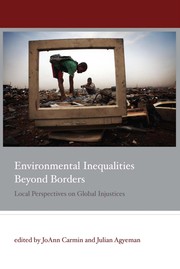
—out of 5—out of 5—out of 5—out of 5—out of 5—out of 5
Magical Tome
- First published
- 2011
- Publisher
- MIT Press
- Pages
- 315 pages
- ISBN
- 9781283119160
Environmental inequalities beyond borders
The outer archives are busy
About this book
Multinational corporations often exploit natural resources or locate factories in poor countries far from the demand for the products and profits that result. Developed countries also routinely dump hazardous materials and produce greenhouse gas emissions that have a disproportionate impact on developing countries. This book investigates how these and other globalized practices exact high social and environmental costs as poor, local communities are forced to cope with depleted resources, pollution, health problems, and social and cultural disruption. Case studies drawn from Africa, Asia, the Pacific Rim, and Latin America critically assess how diverse types of global inequalities play out on local terrains. These range from an assessment of the pros and cons of foreign investment in Fiji to an account of the work of transnational activists combating toxic waste disposal in Mozambique. Taken together, the chapters demonstrate the spatial disconnect between global consumption and production on the one hand and local environmental quality and human rights on the other. The result is a rich perspective not only on the ways industries, governments, and consumption patterns may further entrench existing inequalities but also on how emerging networks and movements can foster institutional change and promote social equality and environmental justice.
Match Score
Create a free account to see Match Scores on books the community has marked — once you’ve set your preferences.
Create free accountMarks of the Realm
Marks left by readers of this tome
No community marks yet — be the first to inscribe this tome.
Pacing
Horror / Dark Elements
Romance
Spice Level
LGBTQ+ Representation
Social & Political Themes in Stories