Back to Results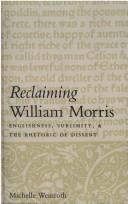
—out of 5—out of 5—out of 5—out of 5—out of 5—out of 5
Magical Tome
- First published
- 1996
- Publisher
- McGill-Queen's University Press
- Pages
- 302 pages
- ISBN
- 9780773514393
Reclaiming William Morris
The outer archives are busy
About this book
Casting new light on the relations between nationalism, rhetoric, and revolution, Michelle Weinroth shows how the English legacy of William Morris was appropriated in the interests of political forces seeking hegemonic power. She argues that Conservative claimants readily disseminated Morris's aesthetic oeuvre, declaring it to be the embodiment of English sensibility. Communists, however, struggled to retain Morris's Englishness while promoting his political doctrine. Weinroth demonstrates that these peripheral ideologues were caught in a paradox: they could not grip the masses without the aesthetic appeal of Englishness, but Englishness was imbued with the very imperialism that they abhorred. Theirs was a propaganda strained by the conflict between political dissent and ruling-class cultural forms. . Moving through theoretical, historical, and exegetical analyses of propagandist texts, Reclaiming William Morris brings out the aesthetic underpinnings of nationalist ideology. Combining the philosophical substance of Karl Marx, Georg Lukacs, Antonio Gramsci, and Ernst Bloch with Kantian aesthetics, Weinroth constructs a conceptual apparatus that explains the impassioned yet decidedly marginal rhetoric of early twentieth-century English communism.
Match Score
Create a free account to see Match Scores on books the community has marked — once you’ve set your preferences.
Create free accountMarks of the Realm
Marks left by readers of this tome
No community marks yet — be the first to inscribe this tome.
Pacing
Horror / Dark Elements
Romance
Spice Level
LGBTQ+ Representation
Social & Political Themes in Stories