Back to Results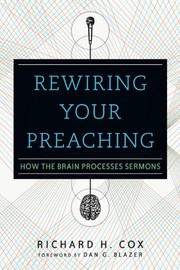
—out of 5—out of 5—out of 5—out of 5—out of 5—out of 5
Magical Tome
- First published
- 2013
- Publisher
- ReadHowYouWant.com, Limited
- ISBN
- 9781459660229
Rewiring Your Preaching
The outer archives are busy
About this book
What preachers preach is not necessarily what hearers hear. Have you ever wondered why some hearers are affected by a sermon but not others? The issue may not necessarily be the content or delivery of the message. It may be how your hearers' brains process what you say. Modern neuroscience illuminates how our brains understand and hear sermons. Verbal stimuli can be accepted or rejected depending on the context of how they are received. The brain processes new information differently than information that reinforces already-held beliefs. To have long-term effect, new information must connect with previous memory. Psychologist, physician and preacher Richard Cox shows that better understanding of the brain can help preachers be more effective in their preaching. Intentional, purposeful preaching can actually produce new neural pathways that change how the brain thinks and how its owner acts. Our brains are intimately connected with how our bodies work, especially in how brain stimuli produce behavioral responses and how people experience comfort and healing in times of pain. God is at work in our brains to enable his people to hear him. Preach with the brain in mind, and help your hearers grow in mental, physical and spiritual health. - Publisher.
Match Score
Create a free account to see Match Scores on books the community has marked — once you’ve set your preferences.
Create free accountMarks of the Realm
Marks left by readers of this tome
No community marks yet — be the first to inscribe this tome.
Pacing
Horror / Dark Elements
Romance
Spice Level
LGBTQ+ Representation
Social & Political Themes in Stories