Back to Results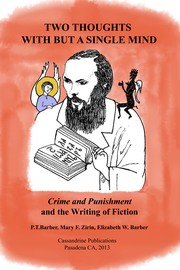
—out of 5—out of 5—out of 5—out of 5—out of 5—out of 5
Magical Tome
- First published
- 2013
- Publisher
- Cassandrine Publications
- Pages
- 182 pages
Two Thoughts with but a Single Mind
The outer archives are busy
About this book
Dostoevsky’s subject in Crime and Punishment is an epiphany, and he chose to write about it by creating a character whose name means “schism” and turning the pieces of his shattered mind into separate characters. Raskolnikov’s friend Razumikhin is named from a word meaning “reason”: whenever he shows up, someone gets a little smarter. The name of the main female, Sonia, is a diminutive of Sophia, Greek for “wisdom”: whenever she shows up, someone gets wise to himself. The fabled coincidences that scholars find in this novel aren’t coincidences at all on the metaphorical level. Dostoevsky doesn’t exactly conceal from the reader that his characters are all parts of Raskolnikov, but he can’t make it too explicit either. If he did, the reader’s ribs would get very sore from all that nudging. But he does put in plenty of clues. For example, Svidrigailov, late in the story, remembers something that had happened not to him, but to Raskolnikov when the latter was all alone. At another point the narrator even gets the name of a character wrong, and it stays “wrong” from then on—unless the casual mention of a name-day ceremony is a hint that the change was purposeful. As the destructive parts of Raskolnikov’s mind are killed or evicted, he moves toward wholeness. But Dostoevsky’s choice here creates a serious problem. When Raskolnikov kills the pawnbroker, his mental and emotional state becomes worse, so she must represent a good part of his mind, deteriorated by neglect. If that’s so, wouldn’t she have to revive for Raskolnikov to recover? But don’t take our word: Dostoevsky will be happy to show you his solution himself.
Match Score
Create a free account to see Match Scores on books the community has marked — once you’ve set your preferences.
Create free accountMarks of the Realm
Marks left by readers of this tome
No community marks yet — be the first to inscribe this tome.
Pacing
Horror / Dark Elements
Romance
Spice Level
LGBTQ+ Representation
Social & Political Themes in Stories