Back to Results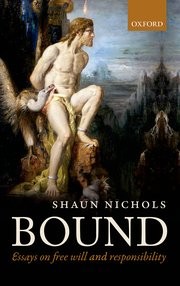
—out of 5—out of 5—out of 5—out of 5—out of 5—out of 5
Magical Tome
- First published
- 2017
- Publisher
- Oxford University Press
- Pages
- 208 pages
- ISBN
- 9780198801313
Bound
The outer archives are busy
About this book
The problem of free will arises from ordinary, commonsense reflection. Shaun Nichols examines these ordinary attitudes from a naturalistic perspective. He offers a psychological account of the origins of the problem of free will. According to his account the problem arises because of two naturally emerging ways of thinking about ourselves and the world, one of which makes determinism plausible while the other makes determinism implausible. Although contemporary cognitive science does not settle whether choices are determined, Nichols argues that our belief in indeterminist choice is grounded in faulty inference and should be regarded as unjustified. However, even if our belief in indeterminist choice is false, it's a further substantive question whether that means that free will doesn't exist. Nichols argues that, because of the flexibility of reference, there is no single answer to whether free will exists. In some contexts, it will be true to say 'free will exists'; in other contexts, it will be false to say that. With this substantive background in place, this book promotes a pragmatic approach to prescriptive issues. In some contexts, the prevailing practical considerations suggest that we should deny the existence of free will and moral responsibility; in other contexts the practical considerations suggest that we should affirm free will and moral responsibility. This allows for the possibility that in some contexts, it is morally apt to exact retributive punishment; in other contexts, it can be apt to take up the exonerating attitude of hard incompatibilism. The problem of free will arises from ordinary, commonsense reflection. Shaun Nichols examines these ordinary attitudes from a naturalistic perspective. He offers a psychological account of the origins of the problem of free will. According to his account the problem arises because of two naturally emerging ways of thinking about ourselves and the world, one of which makes determinism plausible while the other makes determinism implausible. Although contemporary cognitive science does not settle whether choices are determined, Nichols argues that our belief in indeterminist choice is grounded in faulty inference and should be regarded as unjustified. However, even if our belief in indeterminist choice is false, it's a further substantive question whether that means that free will doesn't exist. Nichols argues that, because of the flexibility of reference, there is no single answer to whether free will exists. In some contexts, it will be true to say 'free will exists'; in other contexts, it will be false to say that. With this substantive background in place, this book promotes a pragmatic approach to prescriptive issues. In some contexts, the prevailing practical considerations suggest that we should deny the existence of free will and moral responsibility; in other contexts the practical considerations suggest that we should affirm free will and moral responsibility. This allows for the possibility that in some contexts, it is morally apt to exact retributive punishment; in other contexts, it can be apt to take up the exonerating attitude of hard incompatibilism.
Match Score
Create a free account to see Match Scores on books the community has marked — once you’ve set your preferences.
Create free accountMarks of the Realm
Marks left by readers of this tome
No community marks yet — be the first to inscribe this tome.
Pacing
Horror / Dark Elements
Romance
Spice Level
LGBTQ+ Representation
Social & Political Themes in Stories