Back to Results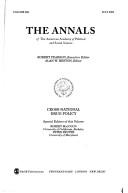
—out of 5—out of 5—out of 5—out of 5—out of 5—out of 5
Magical Tome
- First published
- 2002
- Publisher
- Sage Publications, Inc
- Pages
- 232 pages
- ISBN
- 9780761927433
Cross-national drug policy
The outer archives are busy
About this book
Synopsis: While citizens experiment with illegal drugs, their governments experiment with regulations to prohibit drugs. Scholars, analysts, and policy makers who know what legal prohibitions other countries have tried and found successful will have a better chance of crafting effective drug policy for their countries. This special issue of The Annals describes the experiences of eleven countries: Australia, Canada, Columbia, Denmark, France, Iran, Jamaica, Mexico, Portugal, Russia, and Sweden. Articles are grouped by geography and wealth: the wealthy West, the western hemisphere, and the transition countries. The drug problems of wealthy Western nations have generally worsened since the 1960s. Some have no clearly articulated vision behind their drug policy (e.g. Denmark); others have tough policies (e.g. Sweden). France and Portugal both recently instituted sharp changes in drug policy. While no outcome results are yet available from Portugal, France has experience a huge increase in the number of users in treatment. Australia's strong harm-reduction policy remains in place despite increasing heroin deaths and other drug-related problems. U.S. consumption and U.S. international drug policies affect western hemisphere countries' policy as well as generate problems for them. Although Mexican drug use remains at modest levels, the country faces violent and powerful criminal groups. The groups' creation is related to Mexico's role as the principal source and primary transshipment route for drugs bound for the U.S. IN Jamaica, another route for cocaine shipped to the U.S. and another focus of U.S. international drug policy, drug trafficking has exacerbated the long-standing problem of politically related gang violence by increasing the moneys and weapons involved. Drug use is a relatively minor concern of Columbian policy, also under U.S. pressure; instead, it focuses on trafficking and related corruption and violence. Iran and Russia are countries in transition. Contending with fundamental economic and social change following the collapse of the Soviet Union, Russia has had little political debate regarding its highly intolerant drug policy. Iran's drug policies have frequently shifted during its long history of dealing with opiate abuse, from harsh punishment to regulation of use and back again. Most recently, more therapeutically oriented approaches have been tried. Two articles address geographically broader issues. One shows how U.S. politicians distorted results from a study of needle exchange in Vancouver. The other discusses creation of a new regulatory regime for governing developed nations' banking systems, in the belief that illegal drugs account for a substantial fraction of suspicious financial transactions, particularly across national borders.
Match Score
Create a free account to see Match Scores on books the community has marked — once you’ve set your preferences.
Create free accountMarks of the Realm
Marks left by readers of this tome
No community marks yet — be the first to inscribe this tome.
Pacing
Horror / Dark Elements
Romance
Spice Level
LGBTQ+ Representation
Social & Political Themes in Stories