Back to Results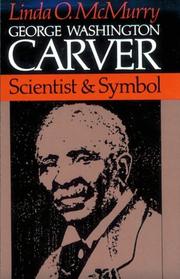
—out of 5—out of 5—out of 5—out of 5—out of 5—out of 5
Magical Tome
- First published
- 1981
- Publisher
- Oxford University Press, USA
- Pages
- 352 pages
- ISBN
- 9780195032055
George Washington Carver, scientist and symbol
The outer archives are busy
About this book
The myth of Carver the humble Peanut Man was due for an overhauling, and McMurry (History, Valdosta State College, Ga.) has done a sound, sometimes exciting job of it--with quiet attention to the making of the myth. Carver contributed, she shows; but he had his reasons. Born in 1864 or '65 on the Missouri farm of Moses and Mary Carver, he lost his mother in infancy (to slave-abductors) and was raised by the fond, non-conforming Carvers as their son: a frail, very black child, obviously gifted, and most at home in the white world. (A "dual identity"--for life.) Even as a tot, he was the neighborhood "plant doctor"; but the local schools were closed to him--so he set out, at twelve or so, on "his long and often frustrating search for an education." In the dozen or more years before he fetched up at Iowa State, he gained experience in small business and homesteading; expanded his household skills (a legacy from Mary Carver); discovered his artistic talent; and pursued his religious bent--source, too, of lifelong friendships. He also encountered naked prejudice; and on occasion accommodated--especially, as he would later, to save a white friend embarrassment. With Carver's arrival at Iowa State (1891), the account broadens--from the formation of his character to the nature of his achievement. Scientist? Agriculturist? Exceptional--or exemplary--black? McMurry, an impressive researcher (who seems no stranger, either, to plants or plant study), fills out the milieu--both difficult and supportive--at Iowa State's pioneering ag school, where lone-black Carver shone (and became the intimate of later US Secretaries of Agriculture). She then places him--with painstaking fairness--in Booker T. Washington's contrasting (students who could barely read, strictly practical study), yet not inimical Tuskegee. Though Carver and Washington quarreled until the latter's death in 1915 (and prickly, uppish Carver, a poor administrator, lost campus-standing in the process), Washington's demands for tangible results and the needs of Alabama's poor black farmers brought forth from Carver the outstanding work of his career: the advancement of sweet potatoes, cowpeas, and peanuts as substitutes for cotton, soil-replenishers, income-supplements, and home-grown food. Concerning which, in his "threefold" bulletins, he provided instruction for farmers, information for teachers, and recipes for housewives. . . . McMurry thus sees him, convincingly, as a great, holistic educator and premature champion of small-scale farming who went astray--after Washington's death and the advent of fame--into commercialization of the peanut and his own glorification as a "wizard chemist" and "saintly genius." She also sets out how these roles served both whites and blacks; reminds the reader of Carver's personal and circumstantial reasons for not demurring; and reaffirms, in particular, his impact on individuals (prominent among whom was Southern radical Howard Kester--viz. Anthony Dunbar's Against the Grain, above). An intellectually satisfying study and no less an affecting biography.
Match Score
Create a free account to see Match Scores on books the community has marked — once you’ve set your preferences.
Create free accountMarks of the Realm
Marks left by readers of this tome
No community marks yet — be the first to inscribe this tome.
Pacing
Horror / Dark Elements
Romance
Spice Level
LGBTQ+ Representation
Social & Political Themes in Stories