Back to Results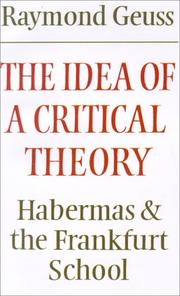
—out of 5—out of 5—out of 5—out of 5—out of 5—out of 5
Magical Tome
- First published
- 1981
- Publisher
- Cambridge University Press
- Pages
- 100 pages
- ISBN
- 0521240727
The Idea of a Critical Theory
The outer archives are busy
About this book
Habermas and earlier members of the Frankfurt School have presented critical theory as a radically new form of knowledge. It is differentiated from the natural sciences as essentially 'reflective': the knowledge it provides guides us towards enlightenment as to our true interests, and emancipation from often unsuspected forms of external and internal coercion. Its first paradigms are in the writings of Marx and Freud. In this book Raymond Geuss sets out these fundamental claims and asks whether they can be made good. Is a science which does not simply describe and explain social phenomena, but also criticizes? The concept of ideology plays a crucial role in this discussion. Geuss carefully analyses it here, its relation to our beliefs and interests, and the account of truth and confirmation required by its critique and the concomitant goal of self-knowledge. The book does not presuppose acquaintance with the works of the Frankfurt School and can serve as a lucid introduction to their central, distinctive theses. But in its scrupulous and incisive consideration of these, and the modified support for them that emerges, it will also interest experts on critical theory and others concerned with the methods and purposes of the social sciences in general.
Match Score
Create a free account to see Match Scores on books the community has marked — once you’ve set your preferences.
Create free accountMarks of the Realm
Marks left by readers of this tome
No community marks yet — be the first to inscribe this tome.
Pacing
Horror / Dark Elements
Romance
Spice Level
LGBTQ+ Representation
Social & Political Themes in Stories