Back to Results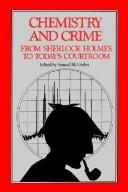
—out of 5—out of 5—out of 5—out of 5—out of 5—out of 5
Magical Tome
- First published
- 1983
- Publisher
- American Chemical Society
- Pages
- 135 pages
- ISBN
- 0841207844
Chemistry and Crime from Sherlock Holmes to Todays Courtroom
The outer archives are busy
About this book
The application of the principles of chemistry both for committing crimes and for tracking down criminals interests audiences of all ages and walks of life. This interest is the reason for the long-standing popularity of fictional works that describe crimes made possible by the criminal's knowledge of chemistry and crimes solved by the sleuth's knowledge of chemistry. Arthur Conan Doyle modeled the Sherlock Holmes character after one of his professors at Edinburgh University. Doyle could never have realized that his stories would inspire Edmond Locard to form the first forensic laboratory in France in 1910; nor could he have predicted that forensic science would develop to its present level of sophistication and specialization. The first section of this book presents three chapters on chemistry in fictional crimes. Ely Liebow opens the book with a discussion of the influences of Arthur Conan Doyle's medical school professors on his fiction. In another chapter, Natalie Foster displays Dorothy L. Sayers' extensive knowledge of chemistry through three of Sayers' works. Various methods used for testing blood in 1875 are presented by Samuel Gerber in the last of these chapters. The second section contains chapters that discuss the present state of the art. The first two chapters in this section detail recent changes in the field of forensic science and provide definitions, explanations, and a short history of forensic science and criminalistics. V. P. Quinn's chapter describes the chemical composition and analysis of bullets and the uses of this information in some famous murder cases, such as the assassination of John F. Kennedy. Bloodstain analysis is the subject of the next two chapters, one on case histories and one on serological and electrophoretic techniques. The last chapter presents results of a 2-year study of four police jurisdictions to determine the kinds of physical evidence collected and used in typical crminal investigations. Arthur Conan Doyle's stories were so convincing that, ever since they were written, the general public has expected police laboratories to match Holmes' accomplishments. As the second section of this book shows, after more than 100 years, forensic scientists are approaching that blend of ingenuity and technology.
Match Score
Create a free account to see Match Scores on books the community has marked — once you’ve set your preferences.
Create free accountMarks of the Realm
Marks left by readers of this tome
No community marks yet — be the first to inscribe this tome.
Pacing
Horror / Dark Elements
Romance
Spice Level
LGBTQ+ Representation
Social & Political Themes in Stories