Back to Results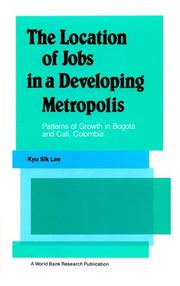
—out of 5—out of 5—out of 5—out of 5—out of 5—out of 5
Magical Tome
- First published
- 1989
- Publisher
- Published for the World Bank [by] Oxford University Press
- Pages
- 183 pages
- ISBN
- 0195207866
The location of jobs in a developing metropolis
The outer archives are busy
About this book
This book establishes in detail, the trends in the location patterns of jobs and the factors that determine the location choices of individual firms. Governments of developing countries have often tried to control rapid urban growth through policies that influence the location of firms and thus of employment. Such policies tend to be inefficient and costly, however, because they attempt to reverse trends that are poorly understood and well entrenched through the operations of markets. The empirical findings in this book offer insight into the probable effects of location policies. They should also help in devising investment programs for urban housing and transport that reflect the location dynamics of the demand for these services. The author documents changing location patterns of employment in Bogota and Cali with the use of several large files of data on firms and households; he analyses the components to predict future trends; and he presents estimated econometric models to explain location choices of different types of manufacturing and commercial firms. The models include an extension of the bid-rent theory to the multinomial logit specification for manufacturing firms' location choices, gravity models for trade and service firms, and aggregate models for trade and service firms, and aggregate models to determine the elasticity of substitution between land and other factors of production and to estimate land price and wage gradients.
Match Score
Create a free account to see Match Scores on books the community has marked — once you’ve set your preferences.
Create free accountMarks of the Realm
Marks left by readers of this tome
No community marks yet — be the first to inscribe this tome.
Pacing
Horror / Dark Elements
Romance
Spice Level
LGBTQ+ Representation
Social & Political Themes in Stories