Back to Results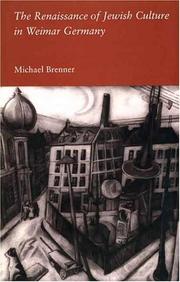
—out of 5—out of 5—out of 5—out of 5—out of 5—out of 5
Magical Tome
- First published
- 1996
- Publisher
- Yale University Press
- Pages
- 306 pages
- ISBN
- 0300062621
The renaissance of Jewish culture in Weimar Germany
The outer archives are busy
About this book
Although Jewish participation in German society increased after World War I, Jews did not completely assimilate into that society. In fact, says Michael Brenner in this intriguing book, the Jewish population of Welmar Germany became more aware of its Jewishness and created new forms of German-Jewish culture in literature, music, fine arts, education , and scholarship. Brenner presents the first in-depth study of this culture, drawing a fascinating portrait of people in the midst of redefining themselves. The Weimar Jews chose neither a radical break with the past nor a return to the past but instead dressed Jewish traditions in the garb of modern forms of cultural expression. Brenner describes, for example, how modern translations made classic Jewish texts accessible, Jewish museums displayed ceremonial artifacts in a secular framework, musical arrangements transformed synagogue liturgy for concert audiences, and popular novels recalled aspects of the Jewish past. Brenner's work, while bringing this significant historical period to life, illuminates contemporary and even enhancement of Jewish distinctiveness, combined with the seemingly successful participation of Jews in a secular, non-Jewish society, offer fresh insight into modern questions of Jewish existence, identity, and integration into other cultures.
Match Score
Create a free account to see Match Scores on books the community has marked — once you’ve set your preferences.
Create free accountMarks of the Realm
Marks left by readers of this tome
No community marks yet — be the first to inscribe this tome.
Pacing
Horror / Dark Elements
Romance
Spice Level
LGBTQ+ Representation
Social & Political Themes in Stories