Back to Results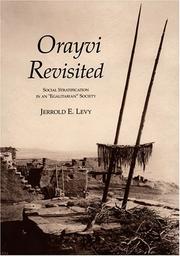
—out of 5—out of 5—out of 5—out of 5—out of 5—out of 5
Magical Tome
- First published
- 1992
- Publisher
- School of American Research Press
- Pages
- 198 pages
- ISBN
- 0933452330
Orayvi revisited
The outer archives are busy
About this book
"The Hopi Indians of Arizona have long been portrayed in the anthropological literature as a sober, peaceful, and cooperative people with an egalitarian social organization. Hopi ideology itself encourages this perception. But, as Jerrold E. Levy argues in Orayvi Revisited, traditional Hopi society was divided by an internal contradiction between an ideology of cooperation and integration and a highly stratified system of land control. In 1906, this contradiction led the Third Mesa village of Orayvi to split into two factions, a split characterized by Levy as "a revolt of the landless."" "In his penetrating analysis of the hierarchical elements of Hopi society, Levy ranks the land owned by each Hopi clan according to its quality and finds a mirror of this ranking in the clans' differential access to ceremonial offices. Working against this hierarchical structure were traditions such as village endogamy that functioned to increase cohesion. These opposing forces kept Hopi society in a state of dynamic tension - a tension that in times of environmental stress could erupt in the social trauma of factionalism and village fissioning." "Using the recently rediscovered turn-of-the-century field notes of Mischa Titiev and the federal census data of 1900, Levy achieves the first quantitative analysis of the 1906 Orayvi split. He also provides a lucid reading of the role of ideology and myth - and the Hopi concept of history as prophecy - in promoting village cohesiveness. During the Orayvi split, each faction was able to use this ideology to formulate prophecies and interpret myths to support its own position. By addressing both anthropological and Hopi interpretations of the split, Levy gives the reader a comprehensive understanding of this fundamental event in Southwestern Pueblo history. In the process, he answers a number of long-standing questions about the much-debated nature of Hopi society."--Jacket.
Match Score
Create a free account to see Match Scores on books the community has marked — once you’ve set your preferences.
Create free accountMarks of the Realm
Marks left by readers of this tome
No community marks yet — be the first to inscribe this tome.
Pacing
Horror / Dark Elements
Romance
Spice Level
LGBTQ+ Representation
Social & Political Themes in Stories