Back to Results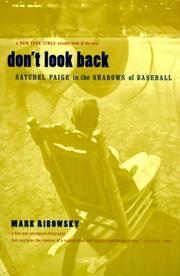
—out of 5—out of 5—out of 5—out of 5—out of 5—out of 5
Magical Tome
- First published
- 1994
- Publisher
- Da Capo Press
- Pages
- 351 pages
- ISBN
- 030680963X
Don't look back
The outer archives are busy
About this book
With the possible exception of Babe Ruth, there are more myths and legends about Leroy "Satchel" Paige than about anyone in baseball history. A slender, loose-limbed, slow-walking, hard-thrower from baseball's late pre-integration era, Paige was considered by many to be the greatest pitcher who ever lived. The claim is hard to dispute, since Paige was at least in his forties by the time the major leagues were willing to admit men of color, so his record is more anecdotal than statistical. (Even Satch's exact age is a figure of controversy, and some say he may have been fifty by the time he joined the Cleveland Indians.) His reputation is based on his years in the Negro leagues, and on the times he pitched for barnstorming teams that played against major leaguers. Satch's feats were legendary. He could warm up by throwing strikes not over home plate but over a matchbook. On a signal from Satch all his fielders would gather in the infield and sit and watch while he struck out the side, usually on nine pitches. He could pitch both ends of a doubleheader, and then do it again the next day in another city a couple of hundred miles down the road. He threw a blazing fastball with pinpoint control, a hesitation pitch that left hitters half-corkscrewed into the ground, and a baffling breaking ball he called the "Bat Dodger." His famous rules for living, published in Collier's magazine in the 1950s, included the advice to "Avoid fried foods, which angry up the blood" and "Don't look back, something might be gaining on you." All this describes the legend of Satchel Paige. But who was the man? At his peak, Satch was a star on a par with the great black entertainers such as Cab Calloway, Bill Bojangles Robinson, and Louis Armstrong. But he was never popular among his teammates and opponents; he insisted on the prerogatives of a star, he could not be counted on to show up on time, and he insisted on being paid top dollar, never hesitating to jump from one team to another if the price was right. When Satch was finally brought to the big leagues by Bill Veeck, it was hardly the culmination of a lifelong dream; Satch was mostly concerned that he not have to take a pay cut to do it, and that he could protect his right to barnstorm during the winter months. Mark Ribowsky strips away the caricature that has grown up around this great athlete, and shows the real Satchel Paige in the context of his times. In doing so, he gives the best picture yet of life in the Negro leagues, free of the well-meaning but overly romantic visions of recent historians and resurrectionists. Ribowsky shows us the gangsters and shady characters for whom Paige and all the others played for most of their careers, and the battles and cutthroat dealings among them that make today's sports structure like a tea party. By honoring Paige's greatness without shrouding him in condescending myth, Ribowsky does justice to the man who, yes, may well have been the greatest pitcher ever. In Don't Look Back, Ribowsky puts real flesh on the bones of a legend no smaller in stature than that of Babe Ruth - and does so in a book to rank with the best of baseball biography.
Match Score
Create a free account to see Match Scores on books the community has marked — once you’ve set your preferences.
Create free accountMarks of the Realm
Marks left by readers of this tome
No community marks yet — be the first to inscribe this tome.
Pacing
Horror / Dark Elements
Romance
Spice Level
LGBTQ+ Representation
Social & Political Themes in Stories