Back to Results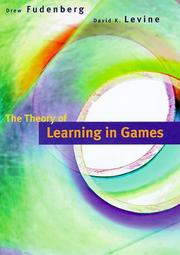
—out of 5—out of 5—out of 5—out of 5—out of 5—out of 5
Magical Tome
- First published
- 1998
- Publisher
- MIT Press
- ISBN
- 9780585133782
The theory of learning in games
The outer archives are busy
About this book
In economics, most noncooperative game theory has focused on equilibrium in games, especially Nash equilibrium and its refinements. In The Theory of Learning in Games Drew Fudenberg and David Levine develop an alternative explanation that equilibrium arises as the long-run outcome of a process in which less than fully rational players grope for optimality over time. The models they explore provide a foundation for equilibrium theory and suggest useful ways for economists to evaluate and modify traditional equilibrium concepts.
Match Score
Create a free account to see Match Scores on books the community has marked — once you’ve set your preferences.
Create free accountMarks of the Realm
Marks left by readers of this tome
No community marks yet — be the first to inscribe this tome.
Pacing
Horror / Dark Elements
Romance
Spice Level
LGBTQ+ Representation
Social & Political Themes in Stories