Back to Results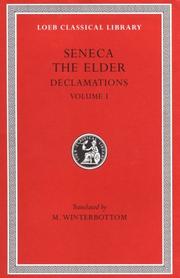
—out of 5—out of 5—out of 5—out of 5—out of 5—out of 5
Magical Tome
- First published
- 1974
- Publisher
- Harvard University Press
- ISBN
- 0674995104
The elder Seneca declamations
The outer archives are busy
About this book
Roman secondary education aimed principally at training future lawyers and politicians. Under the late Republic and the Empire, the main instrument was an import from Greece -- declamation, the making of practice-speeches on imaginary subjects. There were two types of such speeches: controversiae on law-court themes, suasoriae on delibertaive topics. On both types a prime source of our knowledge is the work of Lucius Annaeus Seneca, a Spaniard from Cordoba, father of the distinguished philosopher and stylist. Towards the end of his long life (?55 B.C. -? A.D. 40) he collected together under the title (it would seem) Oratorum et rhetorum sententiae, divisiones, colores, ten books devoted to controversiae (some only preserved in excerpt) and at least one (surviving) to suasoriae. These books contained his memories of the famous rhetorical teachers and practitioners of his day: their lines of argument, their methods of approach, their idiosyncracies, and above all their epigrams. The extracts from the disclaimers, though scrappy, throw invaluable light on the influences that coloured the styles of most pagan (and many Christian) writers of the Empire. Unity is provided by Seneca's own contribution, the lively prefaces, engaging anecdote about speakers, writers and politicians, the brisk criticism of declamatory excess.
Match Score
Create a free account to see Match Scores on books the community has marked — once you’ve set your preferences.
Create free accountMarks of the Realm
Marks left by readers of this tome
No community marks yet — be the first to inscribe this tome.
Pacing
Horror / Dark Elements
Romance
Spice Level
LGBTQ+ Representation
Social & Political Themes in Stories