Back to Results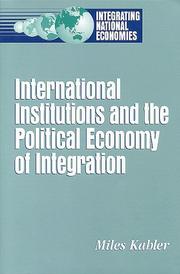
—out of 5—out of 5—out of 5—out of 5—out of 5—out of 5
Magical Tome
- First published
- 1995
- Publisher
- Brookings Institution
- Pages
- 163 pages
- ISBN
- 0815748221
International institutions and the political economy of integration
The outer archives are busy
About this book
Dynamic changes in international institutions have been a striking feature of international politics in the post-cold war world. The General Agreement on Tariffs and Trade (GATT) has been transformed into the World Trade Organization, the International Monetary Fund (IMF) and the World Bank have assumed new roles in the transitional economies of Eastern Europe and the former Soviet Union, and regional arrangements have proliferated. With deepening economic integration, these institutions play an increasingly important role. In this book, part of the Integrating National Economies series, Miles Kahler examines both global and regional institutions and their importance in the world economy. Kahler explains the variation in these institutions and assesses the role they play in sustaining economic cooperation among nations. With greater tensions arising between an economy that is more integrated and a political order that remains highly fragmented, international institutions face many hurdles in supporting policy coordination and harmonization. The core global institutions - the IMF, World Bank, and GATT - have redesigned their roles in response to the new realities of economic integration. Kahler explains the evolution of these institutions, compares their strengths and weaknesses, and analyzes their efforts to deal with deeper integration. He then considers the array of regional institutions - the European Union, North American Free Trade Agreement, and Asia-Pacific Economic Cooperation - and the tensions they must confront between national desires to maintain political autonomy and, at the same time, benefit from intensified economic exchange. International institutions confront common dilemmas of widening scope and larger memberships. Kahler concludes that no single institutional model guarantees successful international collaboration. He argues that institutional variety is inevitable and even desirable, and highlights the advantages of flexible institutions. Rapid international economic change, domestic political demands, and the changing boundaries of knowledge reward institutions that are decentralized and respond promptly to the demands of their members. International collaboration may be sustained by institutions that do not display clear, substantive rules or centralized enforcement powers.
Match Score
Create a free account to see Match Scores on books the community has marked — once you’ve set your preferences.
Create free accountMarks of the Realm
Marks left by readers of this tome
No community marks yet — be the first to inscribe this tome.
Pacing
Horror / Dark Elements
Romance
Spice Level
LGBTQ+ Representation
Social & Political Themes in Stories