Back to Results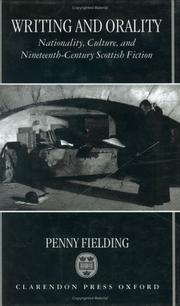
—out of 5—out of 5—out of 5—out of 5—out of 5—out of 5
Magical Tome
- First published
- 1996
- Publisher
- Clarendon Press
- Pages
- 251 pages
- ISBN
- 0198121806
Writing and orality
The outer archives are busy
About this book
Writing and Orality explores the concepts of nationality and culture in nineteenth-century Scottish fiction, through the writing of Walter Scott, James Hogg, R.L. Stevenson, and Margaret Oliphant. It describes the relationship between speech and writing as a foundation for the literary construction of national and class identity, exploring how orality and literacy are figured in nineteenth-century preoccupations with the definition of 'culture'. The book further examines the persistence of the romance mode in the ascendancy of the novel and the relevance of speech and writing in the gendering of narrative forms, including the association of the oral with the unconscious at the end of the nineteenth century. Fielding offers a new model, following deconstruction, of the speech/writing opposition, in which it is subject to the varying influences of social and material forces. Writing and Orality looks at narrative experiments in Scottish writing as they are effected by constructions of class and gender, popular literacy, and the condition of books as artifacts and commodities. The book offers a comprehensive study of the interactions of nineteenth-century Scottish fiction and modern theoretical thinking, drawing on deconstruction, narrative theory, the history and theory of orality, and psychoanalysis.
Match Score
Create a free account to see Match Scores on books the community has marked — once you’ve set your preferences.
Create free accountMarks of the Realm
Marks left by readers of this tome
No community marks yet — be the first to inscribe this tome.
Pacing
Horror / Dark Elements
Romance
Spice Level
LGBTQ+ Representation
Social & Political Themes in Stories