Back to Results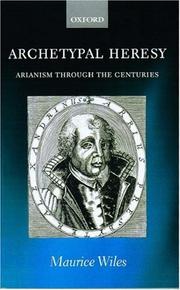
—out of 5—out of 5—out of 5—out of 5—out of 5—out of 5
Magical Tome
- First published
- 1996
- Publisher
- Clarendon Press
- Pages
- 204 pages
- ISBN
- 0198269277
Archetypal heresy
The outer archives are busy
About this book
Arianism has always been regarded as the archetypal heresy. It did affirm the divinity of Christ as the Son of God, but, unlike orthodoxy, it regarded the divinity as secondary and inferior to that of the Father, the one Supreme God. Recently many scholars have presented a more positive view of the religious intentions of Arianism than has been customary in the past. Yet the Nicene Creed, which was designed explicitly to outlaw Arianism, remains one of the primary expressions of Christian orthodoxy. Maurice Wiles traces the history of how Arianism has been viewed in later Christian thought, particularly where scholars or religious groups have adopted broadly Arian views. The main example of a re-emergence of Arian ideas is among the leaders of the new scientific Enlightenment in the early eighteenth century, especially Sir Isaac Newton and his disciples, William Whiston and Samuel Clarke. The longest section of the book deals with how and why their beliefs took this form, and why this approach disappeared again around the end of the century. A final section considers the interaction of belief and critical judgement in British Arian scholarship during the nineteenth and twentieth centuries.
Match Score
Create a free account to see Match Scores on books the community has marked — once you’ve set your preferences.
Create free accountMarks of the Realm
Marks left by readers of this tome
No community marks yet — be the first to inscribe this tome.
Pacing
Horror / Dark Elements
Romance
Spice Level
LGBTQ+ Representation
Social & Political Themes in Stories