Back to Results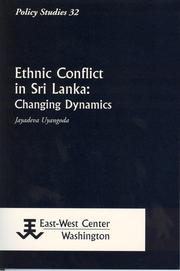
—out of 5—out of 5—out of 5—out of 5—out of 5—out of 5
Magical Tome
- First published
- 2007
- Publisher
- East-West Center Washington
- Pages
- 76 pages
- ISBN
- 9781932728583
Ethnic Conflict in Sri Lanka
The outer archives are busy
About this book
Sri Lanka’s ethnic conflict has become protracted and intractable. The twenty-five- year-old civil war has been interrupted numerous times for a negotiated peace and political settlement, yet the conflict has defied deescalation. All failed attempts at negotiated peace have propelled the civil war forward with greater vitality and intensity. Both war and “peace” appear to be mutually sustaining dimensions of a single process of conflict produced and sustained by two defining dynamics: (1) intense competition for state power between state-seeking minority nationalism and state-asserting majority nationalism; and (2) the fact that the “ethnic war” has acquired relative autonomy from the political process of the “ethnic conflict.” Against this backdrop, attempts at negotiated settlement, with or without ceasefires, have not only failed but have redefined the conflict. This study suggests that early deescalation or a long-term settlement is not possible at present. A protracted conflict requires a protracted process of political transformation. Since the question of state power is at the core of the conflict, a credible short-term path to peace should begin with negotiations that aim at, and lead to, reconstituting state power along ethnic lines. This will require a grand ethnic compromise among Sinhalese, Tamil, and Muslim elites, backed by the people in the three main ethnic formations. Sri Lanka’s ethnic conflict has become protracted and intractable. The twenty-five- year-old civil war has been interrupted numerous times for a negotiated peace and political settlement, yet the conflict has defied deescalation. All failed attempts at negotiated peace have propelled the civil war forward with greater vitality and intensity. Both war and “peace” appear to be mutually sustaining dimensions of a single process of conflict produced and sustained by two defining dynamics: (1) intense competition for state power between state-seeking minority nationalism and state-asserting majority nationalism; and (2) the fact that the “ethnic war” has acquired relative autonomy from the political process of the “ethnic conflict.” Against this backdrop, attempts at negotiated settlement, with or without ceasefires, have not only failed but have redefined the conflict. This study suggests that early deescalation or a long-term settlement is not possible at present. A protracted conflict requires a protracted process of political transformation. Since the question of state power is at the core of the conflict, a credible short-term path to peace should begin with negotiations that aim at, and lead to, reconstituting state power along ethnic lines. This will require a grand ethnic compromise among Sinhalese, Tamil, and Muslim elites, backed by the people in the three main ethnic formations.
Match Score
Create a free account to see Match Scores on books the community has marked — once you’ve set your preferences.
Create free accountMarks of the Realm
Marks left by readers of this tome
No community marks yet — be the first to inscribe this tome.
Pacing
Horror / Dark Elements
Romance
Spice Level
LGBTQ+ Representation
Social & Political Themes in Stories