Back to Results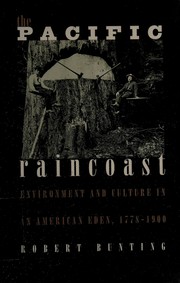
—out of 5—out of 5—out of 5—out of 5—out of 5—out of 5
Magical Tome
- First published
- 1996
- Publisher
- University Press of Kansas
- Pages
- 236 pages
- ISBN
- 0700608052
The Pacific Raincoast
The outer archives are busy
About this book
The Pacific Northwest has always evoked images of lush forested landscapes and travelogue vistas. More recently, such images have been marred by much-publicized controversies pitting spotted owls and salmon against logging interests and power companies. But, as Robert Bunting shows, such conflicts are only the most recent indications of the competition for dominion in the Douglas-fir region running from southern Canada to northern California. Bunting chronicles this struggle from the first sustained contact between Native American and Euroamerican cultures to 1900, when Frederick Weyerhaeuser's purchase of 900,000 acres of Washington forest completed one of the largest land deals in U.S. history. He depicts an evolving Eden that was never as environmentally pristine nor as viciously exploited as some have suggested, but which reflected the complex relations created by competing cultures amid the illusion of inexhaustible abundance. Bunting describes in detail this distinctive bioregion and reveals how various groups of people have viewed it, struggled to possess it, and been shaped by it. His study illuminates the contrasting ways in which Indians and non-Indians interacted with the environment and with each other; the underlying myths that governed such differences; the actual environmental attitudes of western settlers rather than eastern intellectuals; the inextricable links between environmental and human exploitation, as well as between ecological and cultural stability; and the curiously divergent paths of development taken by the two raincoast states, Washington and Oregon.
Match Score
Create a free account to see Match Scores on books the community has marked — once you’ve set your preferences.
Create free accountMarks of the Realm
Marks left by readers of this tome
No community marks yet — be the first to inscribe this tome.
Pacing
Horror / Dark Elements
Romance
Spice Level
LGBTQ+ Representation
Social & Political Themes in Stories