Back to Results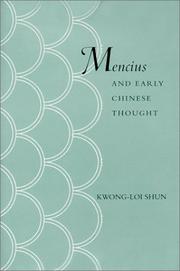
—out of 5—out of 5—out of 5—out of 5—out of 5—out of 5
Magical Tome
- First published
- 1997
- Publisher
- Stanford University Press
- Pages
- 312 pages
- ISBN
- 9780804727884
Mencius and Early Chinese Thought
The outer archives are busy
About this book
Throughout much of Chinese history; Mencius (372-289 B.C.) was considered the greatest Confucian thinker after Confucius himself. Following the enshrinement of the Mencius (an edited compilation of his thought by disciples or disciples of disciples) as one of the Four Books by Sung neo-Confucianists, he was studied by all educated Chinese. The present work studies Mencius in the context of Chinese thought of his era, focusing on several key ethical concepts and contrasting Mencius's views on them with those of earlier thinkers from the Confucian and other schools of thought. These concepts, and the specific terms that define them, had a great influence on subsequent Chinese philosophy. The author closely examines these terms, showing how they were used in the Mencius and other texts. For important passages in the Mencius, the book gives comparative evaluations of competing interpretations found in traditional Chinese commentaries, as well as contemporary translations and discussions. In the process of studying key terms and passages in the Mencius, this book also provides an insight into Mencius's views on a variety of subjects, including human nature, the ethical ideal, the process of self-cultivation, and the relation between self-cultivation and political order.
Match Score
Create a free account to see Match Scores on books the community has marked — once you’ve set your preferences.
Create free accountMarks of the Realm
Marks left by readers of this tome
No community marks yet — be the first to inscribe this tome.
Pacing
Horror / Dark Elements
Romance
Spice Level
LGBTQ+ Representation
Social & Political Themes in Stories