Back to Results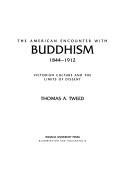
—out of 5—out of 5—out of 5—out of 5—out of 5—out of 5
Magical Tome
- First published
- 1992
- Publisher
- University of North Carolina Press
- Pages
- 280 pages
- ISBN
- 9780807876152
The American encounter with Buddhism, 1844-1912
The outer archives are busy
About this book
"The American encounter with Buddhism began in 1844 with Henry David Thoreau's translation of a passage from a French edition of the Lotus Sutra and Edward Elbridge Salisbury's lecture on the history of Buddhism at the first annual meeting of the American Oriental Society. The debate that ensued in nineteenth-century America about the nature and value of Buddhism is the subject of Thomas A. Tweed's book. Tweed examines the impact of Buddhism and shows what happened when a new and transplanted religious movement came into contact with an established and significantly different tradition. For Tweed, the debate about Buddhism highlights the fundamental beliefs and values of Victorian American culture and delineates the cultural constraints on religious dissent." "At first, Tweed shows, Western interpreters had difficulty placing Buddhism within familiar traditions. Some emphasized the parallels between Buddhism and Catholicism, others the similarities between Buddhism and "heathenism." Later commentators began to stress Buddhism's doctrinal distinctiveness, while apologists presented Buddhism as compatible with familiar Christian beliefs and values and drew parallels between the Buddha and Jesus. After 1879, the conversation grew more lively and widespread as tens of thousands of Americans sought to learn more about Buddhism and a few thousand considered themselves Buddhists. While many of these sympathizers and adherents thought of themselves as dissenters from Victorian America, Tweed shows that, in important ways, they were cultural "consenters." Though dissenters were willing, in their embrace of Buddhism, to abandon the ideas of a personal creator and a substantial, immortal self, they shared certain values with their critics which they did not abandon--individualism, optimism, and activism. They tried to reconcile Buddhism with these values and to attempt in some measure to make Buddhism consonant with traditional Victorian American culture. Despite Buddhist apologists' success in stimulating interest and harmonizing Buddhism to Victorian values, the cultural strain remained too great for many. Although Buddhism attracted much attention, finally it failed to build enduring institutions or inspire more seekers to embrace the religion. It was not until the next century that Buddhism would find a cultural environment more conducive to its growth."--Jacket.
Match Score
Create a free account to see Match Scores on books the community has marked — once you’ve set your preferences.
Create free accountMarks of the Realm
Marks left by readers of this tome
No community marks yet — be the first to inscribe this tome.
Pacing
Horror / Dark Elements
Romance
Spice Level
LGBTQ+ Representation
Social & Political Themes in Stories