Back to Results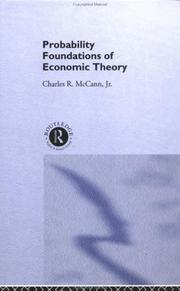
—out of 5—out of 5—out of 5—out of 5—out of 5—out of 5
Magical Tome
- First published
- 1994
- Publisher
- Routledge
- Pages
- 171 pages
- ISBN
- 0415108675
Probability foundations of economic theory
The outer archives are busy
About this book
Having summarized the three main, competing interpretations of probability, the book outlines why it is of such fundamental importance in economics, illustrating this with a comparison of Knight's and Keynes's very different conceptions. The third part of the book examines three very different schools of thought: the Austrians, Keynesian and the New Classical/Rational Expectations approach. It is shown that the Austrian theories and those of Keynes are consistent with subjectivism, individualism and with a view of decision-making as a process. This entails a form of necessarianism as a method of analysis. Rational Expectations, in contrast, is based on quantitative measurement and a need to reconstruct economic theory on instrumentalist grounds. This requires a frequentist approach to probability. . The result should be of interest to people working on the history of economic thought, the methodology and philosophy of economics, the theory of probability in economics, Austrian economics and Keynesian economics.
Match Score
Create a free account to see Match Scores on books the community has marked — once you’ve set your preferences.
Create free accountMarks of the Realm
Marks left by readers of this tome
No community marks yet — be the first to inscribe this tome.
Pacing
Horror / Dark Elements
Romance
Spice Level
LGBTQ+ Representation
Social & Political Themes in Stories