Back to Results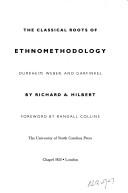
—out of 5—out of 5—out of 5—out of 5—out of 5—out of 5
Magical Tome
- First published
- 2017
- Publisher
- University of North Carolina Press
- ISBN
- 9781469639840
The classical roots of ethnomethodology
The outer archives are busy
About this book
In The Classical Roots of Ethnomethodology, Richard Hilbert demonstrates a historical connection between Harold Garfinkel's recent empirical studies, termed ethnomethodology, and the nineteenth-century sociological theory of Emile Durkheim and Max Weber. Hilbert rejects the conventional view that draws radical distinctions between ethnomethodology and traditional sociological concerns and that even characterizes ethnomethodology as a break from sociology entirely. While ethnomethodology retains its radical character, Hilbert argues, that same radical nature was already contained in classical sociological theory but was driven from prominence by a generation of American interpreters, most notably Talcott Parsons. Moreover, according to Hilbert, ethnomethodology provides empirical demonstration of theoretical principles outlined by Durkheim and Weber that have remained relatively concealed.^ Ethnomethodology's roots in classical sociology can be established analytically, but they are also historical, says Hilbert. Garfinkel was Parsons's student, and his investigations were deliberately and consciously directed to anomalies in Parsons's theory. Parsons's theory, in turn, was based on his readings of Durkheim and Weber, in which he expressly took issue with them, negating and suppressing many of their key insights and dismissing major themes while ignoring others. Thus the "conventional sociology" Garfinkel inherited and eventually overthrew was in fact Parsonian sociology--a "negative image" of Durkheim and Weber. Hilbert shows that wherever Garfinkel overturned Parsons, he simultaneously resurrected classical themes that Parsons had dismissed or suppressed.^ He makes this case on a theme-by-theme basis, demonstrating a one-to-one correspondence between classical ideas and ethnomethodological findings mediated by Parsons, who transmitted inverted classical ideas to Garfinkel. Therefore, says Hilbert, ethnomethodology is not a break from sociology but is at the core of the discipline's origins.
Match Score
Create a free account to see Match Scores on books the community has marked — once you’ve set your preferences.
Create free accountMarks of the Realm
Marks left by readers of this tome
No community marks yet — be the first to inscribe this tome.
Pacing
Horror / Dark Elements
Romance
Spice Level
LGBTQ+ Representation
Social & Political Themes in Stories