Back to Results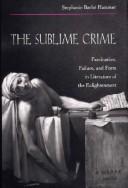
—out of 5—out of 5—out of 5—out of 5—out of 5—out of 5
Magical Tome
- First published
- 1994
- Publisher
- Southern Illinois University Press
- Pages
- 224 pages
- ISBN
- 0809318318
The sublime crime
The outer archives are busy
About this book
"In this hermeneutic analysis of seven literary texts, Stephanie Barbe Hammer studies the roles of criminal protagonists in the dramas of George Lillo (The London Merchant) and Friedrich Schiller (The Robbers) and in the narratives of Abbe de Prevost (Manon Lescaut), Henry Fielding (Jonathan Wild), Marquis de Sade (Justine), William Godwin (Caleb Williams), and Heinrich von Kleist (Michael Kohlhaas). Hammer reflects the current interest in cultural critique by utilizing the social theories of Michel Foucault and the feminist approaches of Helene Cixous and Eve Sedgwick to redefine the Enlightenment as a movement of thought rather than as a strictly defined period synonymous with the eighteenth century. In addition, through the examination of the works of three post-World War II authors (Jean Genet, Anthony Burgess, and Peter Handke), she suggests that the Enlightenment's artistic representations of criminality are unparalleled by subsequent modern literature." "Hammer explains that the seven works she focuses on have been dismissed as failures by readers who have misunderstood the texts aesthetic elements. While claiming that the form of these works breaks down under the pressure of their criminal protagonists, she asserts that this formal failure actually contributes to the success of the works as art. The works "fail" because, like the criminal characters themselves, they break laws. The criminal protagonist effectively sabotages the official story that the text seeks to tell by deflecting the plot, style, and formal requirements in question, subverting its message - be it moral, sentimental, or libertine - through a kind of structural undermining, forcing the text beyond its own formal boundaries. For example, Hammer maintains that the presence of the criminal figure Millwood in Lillo's bourgeois tragedy actually makes the play covertly antibourgeois.". "In other words, Hammer insists that the criminal's subversive presence in these seven works inaugurates new insight, and her analysis thereby challenges late twentieth-century readers to continue the investigation that the works themselves have begun." "This book will prove indispensable to scholars of comparative literature, especially eighteenth-century specialists, as well as to all individuals interested in cultural critique."--BOOK JACKET.
Match Score
Create a free account to see Match Scores on books the community has marked — once you’ve set your preferences.
Create free accountMarks of the Realm
Marks left by readers of this tome
No community marks yet — be the first to inscribe this tome.
Pacing
Horror / Dark Elements
Romance
Spice Level
LGBTQ+ Representation
Social & Political Themes in Stories