Back to Results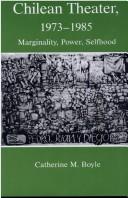
—out of 5—out of 5—out of 5—out of 5—out of 5—out of 5
Magical Tome
- First published
- 1992
- Publisher
- Fairleigh Dickinson University Press
- Pages
- 226 pages
- ISBN
- 0838633633
Chilean theater, 1973-1985
The outer archives are busy
About this book
This work is a study of the themes that have found prominence on the Chilean stage from the military coup of 1973 until 1985. The author looks at how theater has become an important medium of expression, partly as a result of its relative freedom from repression. Censorship is largely economic in nature, and few plays have been expressly banned, although there are sporadic attempts to prohibit plays that are deemed to be politically dangerous. This work poses and seeks to answer the question of how dramatists have used this space for self-expression. As a means of setting the study in a wider perspective, the first chapter is dedicated to a study of the development of Chilean theater since the founding of the first university theater in 1941. The themes treated are found to be expressions of the dominant preoccupations of each period, dealt with through social realism, psychological drama, folkloric theater, and the absurd. The late 1960s, a period of radical social and political change, saw themes of political commitment and social reform come to the fore, when amateur and grassroots theater was flourishing and the individual dramatist found him- or herself in the wings. These are important factors in the understanding of the development of theater since the coup, for it is based in a sense of rupture and continuity. In the initial stages after 1973, theater, like the other arts, suffered a period of silence, a result of censorship and self-censorship, the so-called "cultural blackout." Yet, by 1976, theater began to prove its resilience when new works appeared dealing primarily with the most salient social problem of the period: the social cost of the regime's economic policies to the lowest sector of the community. In the primary chapters of the book the themes, language, and images of the stage are studied: themes of unemployment, and marginality; perceptions of totalitarian rule, which emerge as images of a limbo-like society, stagnating behind a facade of perfection and prosperity; the "forgotten people" who populate the work of a new dramatist, Juan Radigan; and the new theme of political exile and return. Alongside themes of contemporary relevance, there has been a constant exploration of the state of the individual in dictatorship. There is an overwhelming impression of a society in a state of impasse, with a mass of people who feel socially, economically, or culturally marginalized. The dramatic space has been used to voice dissent, to explore the meanings of power, and to explore the inner self in what is commonly portrayed as a prolonged period of impasse in Chilean history.
Match Score
Create a free account to see Match Scores on books the community has marked — once you’ve set your preferences.
Create free accountMarks of the Realm
Marks left by readers of this tome
No community marks yet — be the first to inscribe this tome.
Pacing
Horror / Dark Elements
Romance
Spice Level
LGBTQ+ Representation
Social & Political Themes in Stories