Back to Results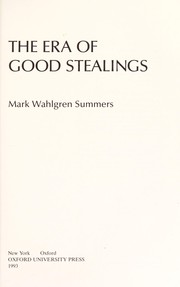
—out of 5—out of 5—out of 5—out of 5—out of 5—out of 5
Magical Tome
- First published
- 1993
- Pages
- 390 pages
The era of good stealings
The outer archives are busy
About this book
In his first book, The Plundering Generation, Mark Wahlgren Summers dealt with corruption and the breakdown of ethics in public life from 1849 to 1861. Continuing his look at the post-Civil War years he examines the effects of the war on public ethics, raising important questions about the significance of corruption for policymaking and American political thought during the years 1865 to 1877. Who, thinking of Reconstruction fails to think of corruption? The Grant administration and the Great Barbecue remain inseparable in our minds. From grafting South Carolina Republicans to plundering Tammany Hall delegates, abuses of the public trust were all the fashion. Noting the effect of corruption on national politics, during the era of Reconstruction, Summers nonetheless suggests the corruption issue may have had more important consequences than the misdeeds themselves. Indeed, the very forces that impelled corruption were the ones that defined and limited the character of reform. Official rascality raised the strongest possible argument for a scaled-down, cheap government, a professional civil service, and a retreat from Reconstruction. Without whitewashing villainy or blackguarding the liberal reformers, Summers re-examines the swindles, exposes the exaggerations and the self-interested motives of the accusers, and suggests ways in which the issue itself struck heavier blows at the way Americans governed themselves than did the acts of corruption.
Match Score
Create a free account to see Match Scores on books the community has marked — once you’ve set your preferences.
Create free accountMarks of the Realm
Marks left by readers of this tome
No community marks yet — be the first to inscribe this tome.
Pacing
Horror / Dark Elements
Romance
Spice Level
LGBTQ+ Representation
Social & Political Themes in Stories