Back to Results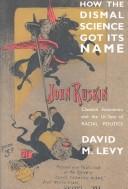
—out of 5—out of 5—out of 5—out of 5—out of 5—out of 5
Magical Tome
- First published
- 2002
- Publisher
- University of Michigan Press
- Pages
- 336 pages
- ISBN
- 9780472089055
How the Dismal Science Got Its Name
The outer archives are busy
About this book
Publisher description: It is widely asserted that the Victorian sages attacked classical economics from a humanistic or egalitarian perspective, calling it "the dismal science," and that their attack is relevant to modern discussions of market society. David M. Levy here demonstrates that these assertions are simply false: political economy became "dismal" because Carlyle, Ruskin, and Dickens were horrified at the idea that systems of slavery were being replaced by systems in which individuals were allowed to choose their own paths in life. At a minimum, they argued, "we" white people ought to be directing the lives of "them," people of color. Economists of the time argued, on the other hand, that people of color were to be protected by the rule of law--hence the moniker "the dismal science." A startling image from 1893, which is reproduced in full color on this book's jacket, shows Ruskin killing someone who appears to be nonwhite. A close look reveals that the victim is reading "The Dismal Science." Levy discusses this image at length and also includes in his text weblinks to Carlyle's "Occasional Discourse on the Negro Question" and to Mill's response, demonstrating that these are central documents in British classical economics. He explains Adam Smith's egalitarian foundations, contrasting Smith's approach to the hierarchical alternative proposed by Carlyle. Levy also examines various visual representations of this debate and provides an illuminating discussion of Smith's "katallactics," the science of exchange, comparing it with the foundations of modern neoclassical economics. How the Dismal Science Got Its Name also introduces the notion of "rational choice scholarship" to explain how attacks on market economics from a context in which racial slavery was idealized have been interpreted as attacks on market economics from a humanistic or egalitarian context. Thus it will greatly appeal to economists, political scientists, philosophers, students of Victorian literature, and historians.
Match Score
Create a free account to see Match Scores on books the community has marked — once you’ve set your preferences.
Create free accountMarks of the Realm
Marks left by readers of this tome
No community marks yet — be the first to inscribe this tome.
Pacing
Horror / Dark Elements
Romance
Spice Level
LGBTQ+ Representation
Social & Political Themes in Stories