Back to Results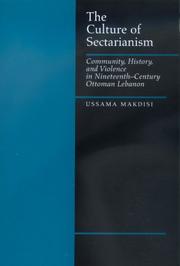
—out of 5—out of 5—out of 5—out of 5—out of 5—out of 5
Magical Tome
- First published
- 2000
- Publisher
- University of California Press
- Pages
- 274 pages
- ISBN
- 9780520218451
The Culture of Sectarianism
The outer archives are busy
About this book
Focusing on Ottoman Lebanon, Ussama Makdisi shows how sectarianism was a manifestation of modernity that transcended the physical boundaries of a particular country. His study challenges those who have viewed sectarian violence as an Islamic response to westernization or simply as a product of social and economic inequities among religious groups. The religious violence of the nineteenth century, which culminated in sectarian mobilizations and massacres in 1860, was a complex, multilayered, subaltern expression of modernization, he says, not a primordial reaction to it. Makdisi argues that sectarianism represented a deliberate mobilization of religious identities for political and social purposes. The Ottoman reform movement launched in 1839 and the growing European presence in the Middle East contributed to the disintegration of the traditional Lebanese social order based on a hierarchy that bridged religious differences. Makdisi highlights how European colonialism and Orientalism, with their emphasis on Christian salvation and Islamic despotism, and Ottoman and local nationalisms each created and used narratives of sectarianism as foils to their own visions of modernity and to their own projects of colonial, imperial, and national development. Makdisi's book is important to our understanding of Lebanese society today, but it also makes a significant contribution to the discussion of the importance of religious discourse in the formation and dissolution of social and national identities in the modern world.
Match Score
Create a free account to see Match Scores on books the community has marked — once you’ve set your preferences.
Create free accountMarks of the Realm
Marks left by readers of this tome
No community marks yet — be the first to inscribe this tome.
Pacing
Horror / Dark Elements
Romance
Spice Level
LGBTQ+ Representation
Social & Political Themes in Stories