Back to Results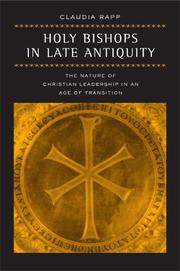
—out of 5—out of 5—out of 5—out of 5—out of 5—out of 5
Magical Tome
- First published
- 2013
- Publisher
- University of California Press
- Pages
- 520 pages
- ISBN
- 9780520931411
Holy Bishops in Late Antiquity
The outer archives are busy
About this book
Between 300 and 600, Christianity experienced a momentous change from persecuted cult to state religion. One of the consequences of this shift was the evolution of the role of the bishop--as the highest Church official in his city--from model Christian to model citizen. Claudia Rapp's exceptionally learned, innovative, and groundbreaking work traces this transition with a twofold aim: to deemphasize the reign of the emperor Constantine, which has traditionally been regarded as a watershed in the development of the Church as an institution, and to bring to the fore the continued importance of the religious underpinnings of the bishop's role as civic leader. Rapp rejects Max Weber's categories of "charismatic" versus "institutional" authority that have traditionally been used to distinguish the nature of episcopal authority from that of the ascetic and holy man. Instead she proposes a model of spiritual authority, ascetic authority and pragmatic authority, in which a bishop's visible asceticism is taken as evidence of his spiritual powers and at the same time provides the justification for his public role. In clear and graceful prose, Rapp provides a wholly fresh analysis of the changing dynamics of social mobility as played out in episcopal appointments.
Match Score
Create a free account to see Match Scores on books the community has marked — once you’ve set your preferences.
Create free accountMarks of the Realm
Marks left by readers of this tome
No community marks yet — be the first to inscribe this tome.
Pacing
Horror / Dark Elements
Romance
Spice Level
LGBTQ+ Representation
Social & Political Themes in Stories